We’ve talked about Password Management and authentication before, and—like your favorite scary movie—it’s worth rewatching. Not because you missed the plot the first time, but because the villain keeps coming back for sequels. October is Cybersecurity Awareness Month, which feels like the right time to remind you that the real horror stories don’t involve haunted houses or graveyards. They happen when someone in your company uses their dog’s name plus “123” as a password.
The Real Horror Behind Weak Passwords
The truth is unsettling in its simplicity: more than 80% of breaches still happen because credentials are compromised—stolen, guessed, or reused. We like to believe our teams are more secure than that, but here’s the thing: humans are human. Reusing passwords, picking weak ones, even modifying them slightly—all this gives hackers an open door. One compromised login is often enough for an attacker to move laterally, escalate privilege, and wreak financial or reputational havoc.
Why Duo Two-Factor Authentication Matters
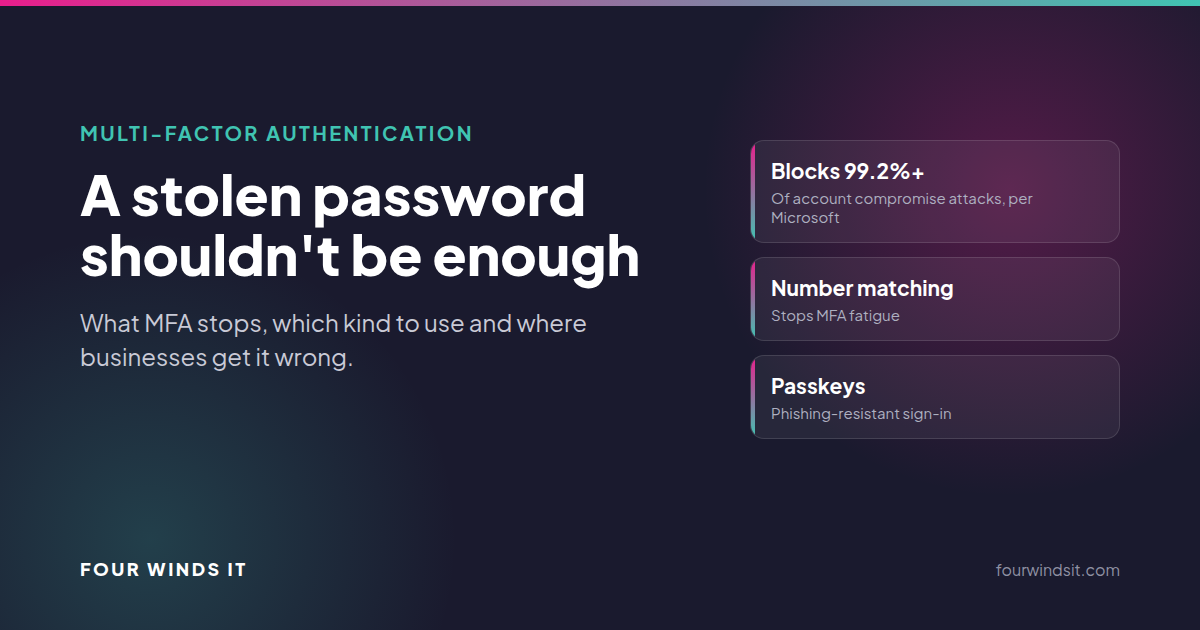
That’s why we keep coming back to the same point: a strong cybersecurity strategy begins with better authentication. Duo two-factor authentication is like upgrading from a flimsy front-door lock to a system that demands proof before letting anyone in. It doesn’t rely solely on “something you know” (a password); it layers on “something you have” (your phone, a biometric scan, or a push-notification confirmation). For employees, it isn’t a burden—it’s usually just that extra tap or thumbprint.
If a password is the skeleton key hackers love, Duo is the deadbolt. The vampire doesn’t get in unless you invite it—and with Duo, only the real you holds the invitation.
Protecting Your Business Before It’s Too Late
From a business perspective, the benefit is clear: Duo delivers one of the best returns on investment in security tools. A recent study by Forrester showed that Cisco Duo achieved ~198% ROI and saved millions of dollars in net present value for companies using it. Duo Security Because it strengthens your perimeter, reduces risk, and often saves you from incidents that cost far more than implementing Duo could ever, it’s among the most cost-efficient steps you can take.
We’ve said this before, and we’ll say it again. Because cybersecurity isn’t about paranoia—it’s about preparation. This October, while the world is stringing up fake cobwebs and carving pumpkins, take a moment to think about the real monsters: the ones trying to sneak into your systems after hours. Duo is how you keep the front door closed.

 Dylan Borden


 Dylan Borden : Aug 10, 2023, 11:00:00 AM